

Best Metal Detectors for Coins in 2026: 6 Expert Picks
Published by Dennis Wynne on 09/16/26
Back in the 1970s, 1980s, and 1990s, finding the best metal detector for us usually meant talking to someone we knew, listening to people in our detecting club, or reading advertisements and reviews in treasure-hunting magazines. Looking back, I believe that it often encouraged strong brand loyalty. Sometimes that loyalty served us well, but sometimes it meant buying the second- or third-best detector for the type of hunting we actually did.
Today we have far more information available, but that creates another problem. There are so many detectors, specifications, videos, opinions, and comparisons that a person can spend weeks researching a metal detector and still wonder which one is actually best for finding coins.
The answer begins with understanding that there is no metal detector that is best everywhere.
Ground conditions matter. Highly mineralized soil, conductive saltwater beaches, heavy concentrations of iron, and modern aluminum trash can all affect detector performance. A traditional single-frequency VLF detector can still be an excellent coin-finding machine, but today's simultaneous multi-frequency VLF detectors give us another important tool for dealing with changing ground conditions and difficult targets.
That is why choosing the best metal detector for coins in 2026 is about much more than finding a machine with a preset labeled “Coins.”
We need to consider where we actually detect and what is likely to be in the ground when we get there.
Old parks, home sites, fairgrounds, schoolyards, curb strips, fields, beaches, and historic gathering places can contain decades, and sometimes centuries, of metal trash alongside the coins we are trying to recover. Nails, aluminum, bottle caps, pull tabs, foil, and other targets can mask desirable signals.
For those of us who enjoy coin hunting, depth matters, but it is only part of the equation. We also look closely at:
- Target separation in iron and modern trash
- Target ID accuracy and information
- Recovery speed
- Audio quality and tone options
- Iron identification and discrimination
- Ground handling
- Simultaneous multi-frequency performance
- Search-coil choices
- Weight and balance
- Waterproofing
- Ease of use
- Overall value
The right detector also depends on where you hunt, how experienced you are, your budget, and the types of coins and other targets you are trying to find.
For 2026, our leading coin-detector choices are the Minelab MANTICORE, Nokta The LEGEND II, XP DEUS II, Minelab EQUINOX 900, Minelab X-TERRA ELITE, and Minelab VANQUISH 460.
Our Best Coin Metal Detectors for 2026 at a Glance
|
Metal Detector |
Our 2026 Choice |
Technology |
Approx. Weight |
Waterproof |
|
Best Overall for Serious Coin Hunters |
Multi-IQ+ simultaneous multi-frequency |
2.9 lb |
16 ft / 5 m |
|
|
Best Value for Serious Coin Hunters |
Simultaneous multi-frequency |
2.6 lb |
16 ft / 5 m |
|
|
Best for Iron and Trashy Historic Sites |
FMF simultaneous multi-frequency |
Configuration dependent; exceptionally lightweight |
Up to 66 ft / 20 m* |
|
|
Best All-Around Coin & Relic Detector |
Multi-IQ simultaneous multi-frequency |
2.8 lb |
16 ft / 5 m |
|
|
Best Affordable Step-Up Detector |
Multi-IQ simultaneous multi-frequency |
2.9 lb |
16 ft / 5 m |
|
|
Best for Beginners |
Multi-IQ simultaneous multi-frequency |
2.6 lb |
16 ft / 5 m |
*DEUS II underwater use depends on configuration and the appropriate XP underwater components.
How We Chose the Best Coin Metal Detectors for 2026
We did not choose these detectors simply by lining up specification sheets and deciding which machine had the most features.
For coin hunting, we consider how those features translate into actual decisions in the field. We looked at target separation, Target ID information, audio, recovery speed, performance around iron, ground handling, simultaneous multi-frequency capability, available search coils, weight and balance, waterproofing, ease of use, and overall value.
We also considered something that is harder to put into a specification chart:
who the detector is actually for.
A detector that makes sense for an experienced hunter working an 1800s home site filled with square nails may be unnecessary for someone beginning in relatively clean parks and schoolyards. Likewise, a detector that is excellent in a city park may not be our first choice for a difficult saltwater beach or heavily mineralized relic site.
This is not presented as a controlled laboratory head-to-head test in which every detector was tested under identical conditions. It is an editorial buying guide combining decades of metal-detecting experience with current manufacturer specifications, detector capabilities, field knowledge, and the kinds of conditions coin hunters actually encounter.
Our “Best” designations therefore mean best suited for that particular type of detectorist or hunting situation. They do not mean that one metal detector will beat every other detector on every target, at every site, in every type of soil.
That simply isn't how metal detecting works.
1. Minelab MANTICORE
Best Overall Metal Detector for Serious Coin Hunters
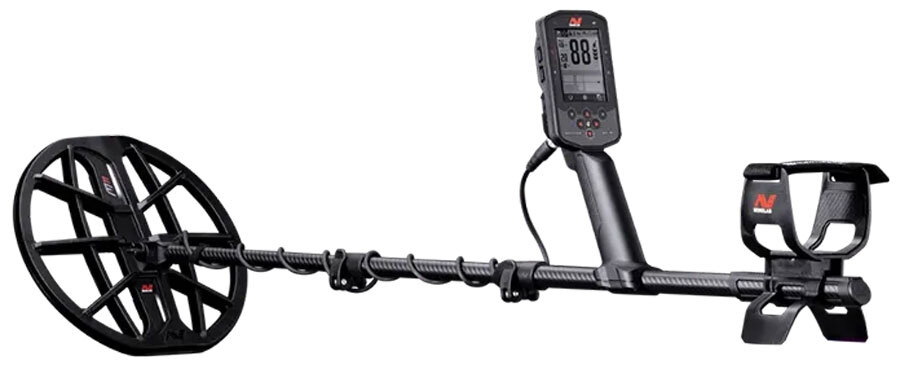
The Minelab MANTICORE is our top overall choice for experienced coin hunters who want a high-performance detector capable of working everything from modern parks to difficult historic sites.
One of the things that separates the MANTICORE from many detectors is the amount of information it gives us about a target.
Rather than simply producing a number and telling us that an object appears to be conductive or ferrous, MANTICORE's 2D Target Identification Map gives us another visual representation of target behavior. That can be particularly useful in places filled with iron, aluminum, bottle caps, and other unwanted targets.
Its Multi-IQ+ simultaneous multi-frequency platform is Minelab's current flagship multi-frequency technology. Minelab has been developing multi-frequency detecting platforms for decades, and the MANTICORE represents the company's current high-end approach to combining target information, speed, depth, and ground handling.
For coin hunters, one of the MANTICORE's major strengths is that combination of target separation, target information, recovery speed, audio, and coil choices.
Don't Overlook Coil Size
With any new-to-you detector, a small coil can be especially useful around old houses, cellar holes, curb strips, demolished structures, and other locations where desirable targets may be surrounded by iron and trash.
In fact, one of the best things a detectorist can do while learning a new machine is spend some time with a smaller coil.
Why?
Because there is less ground under the coil at any given moment and therefore usually fewer targets being analyzed during each sweep. That makes it easier to concentrate on the display, listen to the audio, and understand how the machine responds when targets are close together.
The M8 is an excellent example of this approach with the MANTICORE. Larger coils such as the M9, M11, and M15 make more sense when we move into relatively open ground where additional coverage and depth on some targets become more important.
Bigger is not automatically better. Match the coil to the site.
The MANTICORE weighs approximately 2.9 pounds and is waterproof to 16 feet, making it suitable for parks, fields, freshwater hunting, beaches, and shallow underwater use within the manufacturer's limits.
Why We Like the MANTICORE for Coin Hunting
- Excellent target separation
- Detailed 2D Target ID information
- Multi-IQ+ simultaneous multi-frequency
- Strong performance in difficult ground
- Fast target response
- Excellent coil choices
- Fully waterproof to 16 feet
- Lightweight carbon-fiber shaft
- Extensive settings for experienced detectorists
- A machine an experienced hunter is unlikely to quickly outgrow
Things to Consider
The MANTICORE is an advanced metal detector.
Yes, you can turn it on, select a factory program, and start finding targets. But getting everything the detector can give you requires learning its audio, discrimination, recovery-speed settings, ferrous controls, and 2D target information.
That is true of any good detector. Metal detecting is a skill, and that skill improves with time.
The MANTICORE also offers more detector than many casual hobbyists actually need. If you hunt a few weekends each year in relatively clean parks, there are considerably less expensive machines that may serve you extremely well.
Best For
Experienced coin hunters, old parks, historic properties, trashy sites, beaches, deeper coin hunting, and detectorists who want a high-end machine they can grow into rather than quickly outgrow.
2. Nokta The LEGEND II
Best Value for Serious Coin Hunters
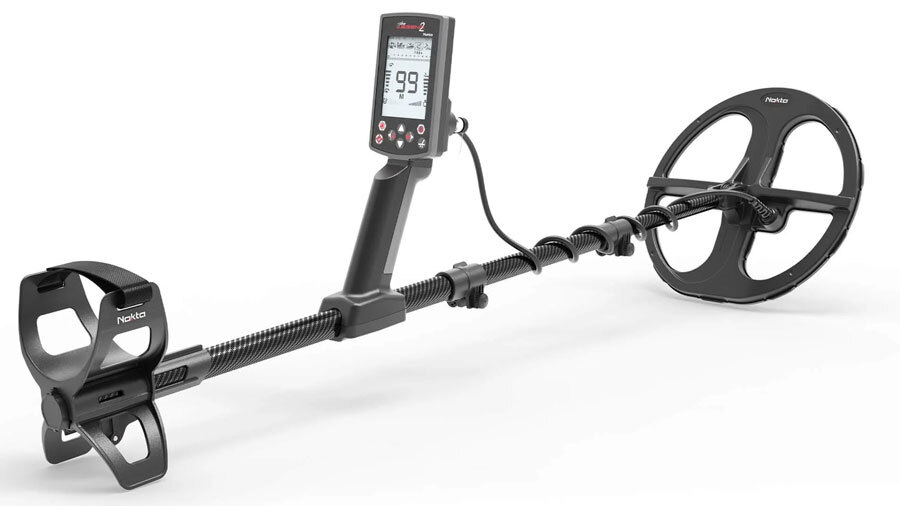
The Nokta LEGEND II is one of the more significant new coin and relic detectors in the 2026 market.
It carries forward the basic idea that made the original LEGEND so successful but changes several important things, including the Target ID system, audio choices, ergonomics, battery capacity, user interface, and search modes.
The LEGEND II uses simultaneous multi-frequency technology and expands the detector to a 99-point Target ID scale, compared with the original LEGEND's 60-point system.
It also gives us seven audio choices: 1, 2, 3, 4, 6, 99, and Pitch tones.
That deserves a little explanation because simply saying “99 tones” can make it sound as though more tones automatically means more finds.
It doesn't.
What Do 99 Target IDs and 99 Tones Actually Do?
The original LEGEND divides its Target ID scale into 60 numerical steps and can provide as many as 60 individual tones. The LEGEND II expands the Target ID scale to 99 steps and offers a 99-tone audio option.
That gives us more resolution across the target range and potentially more audible information about targets that are electrically close to one another.
For a coin hunter, that can matter in a park or other trash-filled location where coins share the ground with pull tabs, foil, aluminum, brass, bottle caps, and other conductive targets.
Instead of several targets being compressed into fewer numerical and audible divisions, the LEGEND II has more steps available to describe what it is seeing.
But more tones do not automatically make the detector better for every hunter.
Some of us may actually prefer a simpler 4- or 6-tone setup because it is easier to interpret and less fatiguing during a long hunt. Others may eventually prefer the 99-tone option because they want as much audible information as possible.
The important point is that The LEGEND II gives us the choice.
For experienced coin hunters who take the time to learn the detector's audio language, that additional resolution can help us hear subtle differences between coins, aluminum trash, brass, and other targets.
The LEGEND II also includes FerroCheck, which provides additional information to help us evaluate suspected ferrous targets.
Search modes include Park, Field, Beach, Relic, and Gold, making the LEGEND II much more than a coin-only detector.
It weighs approximately 2.6 pounds and is fully submersible to 16 feet.
Why We Like the LEGEND II for Coin Hunting
- Simultaneous multi-frequency
- Expanded 99-point Target ID scale
- Seven audio choices, including 99 tones
- FerroCheck
- Dedicated Relic mode
- Improved interface and ergonomics
- Excellent control over target audio
- Fully waterproof to 16 feet
- Approximately 2.6-pound weight
- Park, field, beach, relic, and gold capability
- Very strong feature set for its class
Things to Consider
The LEGEND II offers considerably more adjustment than a basic beginner detector.
New detectorists should resist the temptation to immediately start changing every available setting. Learn the factory programs first. Learn what the detector sounds like over known targets. Then start making adjustments for a reason.
More adjustment does not automatically produce more depth or more finds.
Knowing what the detector is telling you is much more important than constantly changing settings.
Best For
Intermediate and advanced detectorists, coin and relic hunting, trashy parks, iron-heavy historic sites, beach hunting, and hunters who want an advanced multi-frequency platform without immediately moving into the highest-priced detector category.
3. XP DEUS II
Best Coin Metal Detector for Iron and Trashy Historic Sites
Finding an old coin is relatively easy when it is sitting by itself in clean soil.
Finding that same coin when it is only a few inches from an old square nail is a very different challenge.
That is why target separation matters.
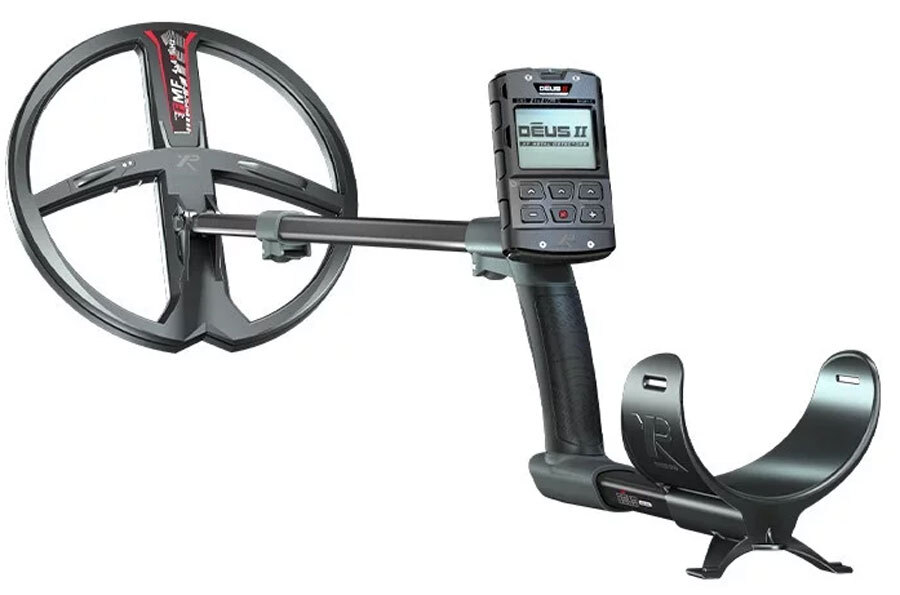
The XP DEUS II has developed a strong following among relic and coin hunters who work iron-contaminated historic sites. XP's Fast Multi Frequency, or FMF, technology operates across multiple frequencies while giving experienced users extensive control over audio, target response, reactivity, and other settings.
The DEUS II is also exceptionally lightweight.
Depending on configuration, a DEUS II setup can be considerably lighter than many conventional detectors. That matters more than a specification sheet might suggest. A well-balanced detector that causes less fatigue can help us maintain proper coil control and a consistent swing for longer periods of time.
What Is the Difference Between the WS6 and the DEUS II Remote Control?
This is something buyers should understand before ordering because there are different DEUS II packages.
On the XP DEUS II, there are two principal ways we can control the detector: the small round WS6 module and the larger rectangular unit that looks somewhat like a cellphone, which XP officially calls the DEUS II Remote Control, or RC.
The Remote Control is the full-size control box. It gives us a larger screen, easier menu navigation, clearer Target ID information, and more convenient access to discrimination, tones, reactivity, sensitivity, programs, and other adjustments.
The WS6 is much more than simply a headphone module, however.
When we use a DEUS II without the Remote Control, the WS6 can become the detector's master controller, communicating with the search coil and allowing us to change settings and view Target IDs from its smaller display.
Using the WS6 as the master does not mean the coil suddenly loses the basic detecting capability of the DEUS II. The major difference for most coin hunters is interface, convenience, and how easily we can see and adjust information.
For coin hunting, we generally prefer the full DEUS II Remote Control because the larger display and controls make evaluating targets and changing settings easier in the field.
The WS6 Master configuration, however, can be an excellent choice for someone whose highest priority is minimum weight and who is comfortable using the smaller interface.
The DEUS II Remote Control is rated for underwater use to 20 meters, or approximately 66 feet, when the detector is configured according to XP's underwater requirements.
Why We Like the DEUS II for Coin Hunting
- Excellent separation around iron
- Extremely lightweight
- FMF simultaneous multi-frequency
- Highly customizable audio
- Fast target response
- Extensive search programs
- Multiple coil choices
- Strong choice for old and iron-contaminated sites
- Full Remote Control or lighter WS6 Master configurations
- Deep-water capability with the appropriate XP setup
Things to Consider
The DEUS II operates differently from many traditional detectors.
Its wireless architecture and highly adjustable audio system are major advantages once you understand them, but they can also create a learning curve.
New buyers also need to pay attention to exactly which DEUS II package they are purchasing. A WS6 Master package is not the same physical configuration as a package that includes the full DEUS II Remote Control.
Neither is automatically the “wrong” choice. They are intended for somewhat different users.
Best For
Experienced coin and relic hunters, cellar holes, old homesteads, ghost towns, iron-contaminated sites, wooded sites, long detecting sessions, and anyone who puts a premium on low weight and fast target separation.
4. Minelab EQUINOX 900
Best All-Around Coin and Relic Metal Detector
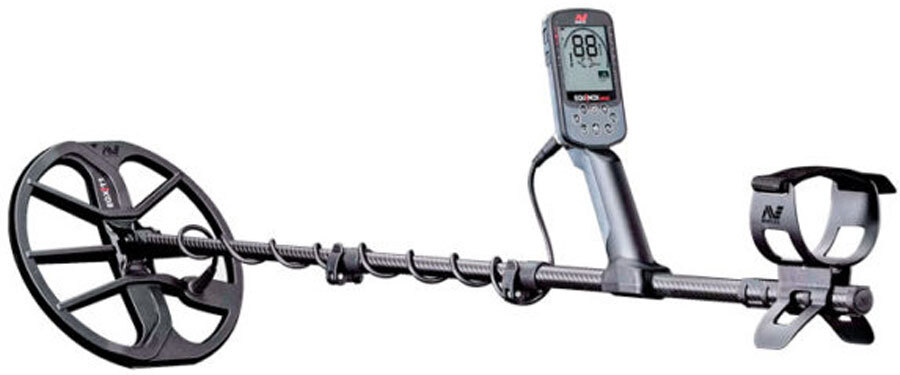
The Minelab EQUINOX 900 occupies an interesting place in the 2026 detector market.
It provides many of the capabilities experienced detectorists want without requiring them to move all the way into MANTICORE territory.
The EQUINOX 900 uses Minelab's proven Multi-IQ simultaneous multi-frequency technology, weighs approximately 2.8 pounds, and is waterproof to 16 feet.
For detectorists who hunt a mixture of parks, fields, relic sites, freshwater, and beaches, that versatility can be more useful than buying a detector optimized for only one style of hunting.
One thing you will hear from some EQUINOX 900 owners is the term “silver magnet.”
Longtime detectorists have heard that phrase before. Years ago, Minelab's E-TRAC developed a similar reputation among many coin hunters. I was one of them. I swear to this day that my first E-TRAC was just a monster for finding silver.
Calling a detector a silver magnet is obviously not a laboratory measurement. A detector cannot find a silver coin that is not there, and the hunter still has to get the coil over it.
But among many EQUINOX users and coin hunters I talk with, the 900 has developed a strong reputation for finding silver coins. I view that as user experience and detectorist opinion rather than something that should be treated as a scientific specification.
The EQUINOX platform also has a large user community. That matters because educational material, experienced users, accessories, settings discussions, and search coils are relatively easy to find.
Why We Like the EQUINOX 900 for Coin Hunting
- Multi-IQ simultaneous multi-frequency
- Good target separation
- Excellent all-around versatility
- Large -19 to 99 Target ID range
- Lightweight carbon-fiber shaft
- Waterproof to 16 feet
- Excellent for both land and beach hunting
- Large ecosystem of coils and accessories
- Advanced enough to grow with a user without being as complex as some flagship detectors
Things to Consider
Detectorists who want Minelab's most advanced target visualization and flagship feature set may prefer the MANTICORE.
On the other hand, someone who only hunts occasionally in relatively clean parks may not need everything the EQUINOX 900 provides.
The 900's great strength is that it occupies the middle ground extremely well.
Best For
Intermediate and advanced detectorists who want one machine for coins, relics, beaches, freshwater, parks, fields, and general-purpose detecting.
5. Minelab X-TERRA ELITE
Best Affordable Step-Up Multi-Frequency Detector
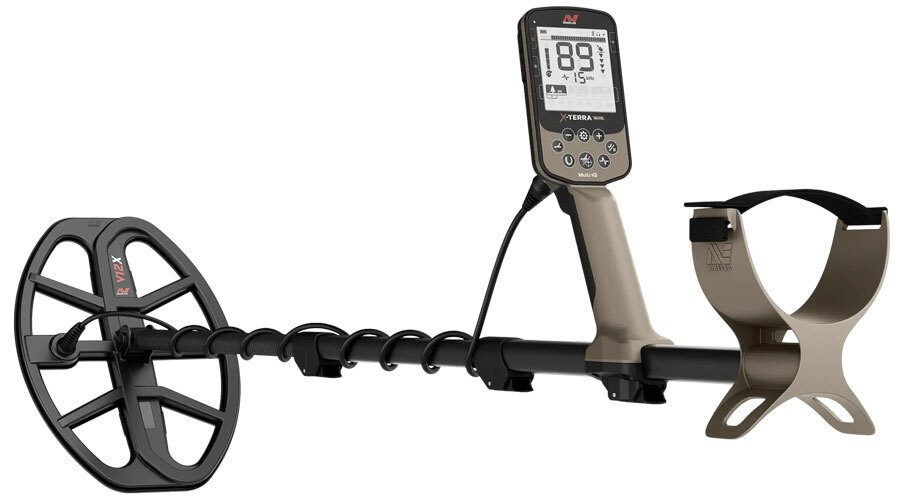
You no longer have to buy a flagship metal detector to get simultaneous multi-frequency technology.
The Minelab X-TERRA ELITE brings Minelab's Multi-IQ platform into a more accessible detector while retaining many of the features coin hunters actually need.
I consider the X-TERRA ELITE a particularly good step-up detector.
It is above the most basic entry-level machines and gives a newer detectorist enough capability that he or she is unlikely to immediately outgrow it. I continue to hear positive comments about this machine from detectorists, particularly considering the class in which it competes.
The X-TERRA ELITE includes Multi-IQ, adjustable recovery speed, Iron Bias, 30 discrimination segments, multiple target tones, and a -19 to 99 Target ID range.
It weighs approximately 2.9 pounds and is waterproof to 16 feet.
For someone moving beyond a basic entry-level detector, those capabilities can make a substantial difference.
Simultaneous multi-frequency is particularly useful for a hunter who frequently switches between inland sites and saltwater beaches. Instead of beginning with an inexpensive land detector and later discovering that wet salt presents a completely different challenge, the X-TERRA ELITE gives the owner a much broader range of possible hunting environments from the beginning.
Why We Like the X-TERRA ELITE for Coin Hunting
- Multi-IQ simultaneous multi-frequency
- Strong price-to-performance position
- Adjustable recovery speed
- Iron Bias
- -19 to 99 Target ID range
- Lightweight
- Fully waterproof to 16 feet
- Relatively approachable for newer users
- Capable enough to remain useful as skills improve
Things to Consider
The X-TERRA ELITE does not offer all the advanced target information, customization, or specialist controls found on machines such as the MANTICORE or DEUS II.
That isn't necessarily a disadvantage.
If your primary goal is finding coins, jewelry, and relics, paying for numerous advanced adjustments that you may never use doesn't always make sense.
Best For
Beginners who want to move beyond the most basic entry-level category, intermediate detectorists, park hunting, beach hunting, freshwater hunting, and anyone looking for an affordable simultaneous multi-frequency detector they can grow into.
6. Minelab VANQUISH 460
Best Coin Metal Detector for Beginners in 2026
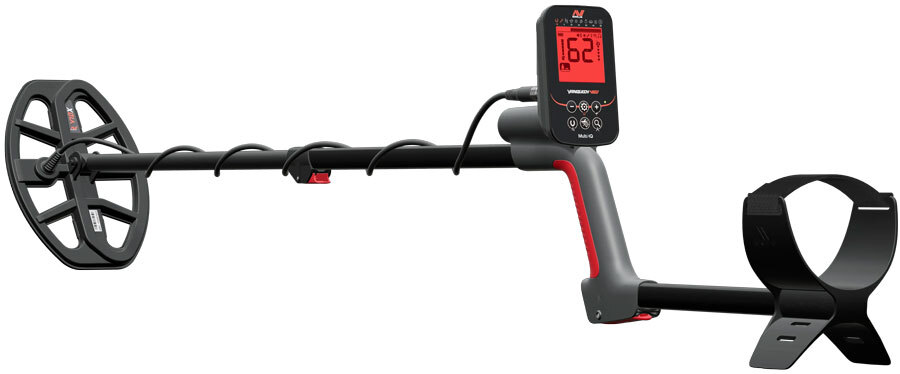
The Minelab VANQUISH 460 earns our beginner recommendation because it puts several capabilities that once required a more expensive detector into a machine specifically designed to remain approachable.
Most importantly, it uses Minelab's Multi-IQ simultaneous multi-frequency technology.
That means a beginner does not have to start with a basic single-frequency detector and then buy another machine simply because he or she wants to hunt wet saltwater beaches or changing ground conditions.
The VANQUISH 460 has Park, Field, and Beach modes, along with a customizable User Profile. It uses a Target ID range extending from -19 for ferrous targets through 99 for non-ferrous targets, has 30 discrimination segments, three Iron Bias settings, and three target tones.
It also includes pinpoint mode.
The detector weighs approximately 2.6 pounds, uses an internal rechargeable lithium-ion battery, supports Bluetooth LE Audio, and is fully waterproof to 16 feet.
That last point represents an important improvement in what a beginner-class detector can offer. A person can learn in a park one weekend, hunt a freshwater swimming area another weekend, and take the same detector to the beach without immediately needing a different machine.
Why We Like the VANQUISH 460 for Beginning Coin Hunters
- Multi-IQ simultaneous multi-frequency
- Easy-to-understand controls
- Park, Field, and Beach programs
- -19 to 99 Target ID range
- 30 discrimination segments
- Three Iron Bias choices
- Pinpoint mode
- Approximately 2.6-pound weight
- Fully waterproof to 16 feet
- Rechargeable battery
- Bluetooth LE Audio capability
- Enough performance that a beginner does not have to immediately upgrade
Things to Consider
The VANQUISH 460 is deliberately simpler than machines such as the MANTICORE, DEUS II, LEGEND II, or EQUINOX 900.
It has fewer tone choices and fewer advanced controls.
For an experienced detectorist who enjoys deeply customizing audio and discrimination behavior, that simplicity may feel limiting.
For a beginner, however, that can be one of its greatest strengths.
There is enough information to learn what targets are doing without requiring a new detectorist to understand dozens of adjustments before he or she has learned proper coil control.
Best For
Beginning coin hunters, parks, schoolyards, fields, freshwater, beaches, families entering the hobby, and anyone who wants an uncomplicated Multi-IQ detector without being confined to an extremely basic machine.
Which Metal Detector Is Best for Finding Old Coins?
There isn't one detector that will find every old coin better than every other machine.
The site matters just as much as the detector.
An old park filled with square nails requires different strengths than a relatively clean athletic field. A saltwater beach creates completely different conditions from inland soil. Highly mineralized ground creates another set of challenges.
If old coins are your goal, pay particular attention to the following.
Target Separation
Old locations frequently contain iron.
A detector's ability to respond to a desirable target sitting beside a nail or another piece of metal may be far more valuable than gaining another inch of theoretical depth in perfectly clean ground.
The deepest detector in the world does us little good if it cannot tell that a coin is present because a nail beside it dominates the response.
Recovery Speed
Recovery speed affects how quickly the detector can respond to adjacent targets.
Higher recovery speeds can help separate targets in dense trash, although simply turning recovery speed to the maximum is not always the answer. Settings interact with other aspects of detector performance.
Use enough recovery speed for the conditions you are hunting.
Coil Size
Bigger is not always better.
An 11-inch coil is an excellent general-purpose size, but smaller coils can be exceptional in dense trash and iron because less ground is being analyzed at one time.
Large coils make more sense when covering open fields, beaches, or other relatively clean areas where ground coverage and potential additional depth become more important.
Serious coin hunters often eventually own more than one search coil for exactly this reason.
Detectorists who know me also know that I believe strongly in small coils and use them often.
Audio
Experienced detectorists frequently make digging decisions from the sound of the target before they ever look at the Target ID.
In a very real sense:
Tones are king.
A numeric Target ID is valuable information, but it should never become the only reason we dig or don't dig a target.
Deep coins, tilted coins, coins standing on edge, coins beside iron, and coins in difficult soil may not give us the textbook Target ID we expect.
Listen to the target.
Turn 90 degrees and listen again.
Walk around it.
Pay attention to what changes and what remains consistent.
It has been my experience over many years that the people willing to investigate more questionable targets are often the people who eventually find things that everyone else has missed.
If in doubt, dig it out.
Ground Conditions
Mineralization can affect depth, stability, target response, and Target ID accuracy.
Automatic ground balancing makes modern detectors considerably easier to operate, while advanced machines give experienced users additional control when conditions require it.
Do not assume that somebody else's “perfect settings” from another state, another beach, or another park will automatically be perfect where you hunt.
The ground gets a vote.
Is Simultaneous Multi-Frequency Better for Coin Hunting?
For many coin hunters, yes, but not because single-frequency detectors suddenly stopped finding coins.
Single-frequency machines have recovered tremendous numbers of valuable coins and continue to work very well.
Simultaneous multi-frequency gives a detector additional frequency information to work with and can provide important advantages across changing ground conditions and target types.
It becomes particularly valuable for detectorists who move between inland soil, mineralized ground, and conductive saltwater environments.
For hunters choosing a modern VLF detector for wet saltwater sand and surf, simultaneous multi-frequency is generally preferable to many traditional single-frequency VLF machines because it can handle the conductive salt environment much more effectively.
That does not mean simultaneous multi-frequency is the only technology capable of working a saltwater beach. Pulse-induction detectors are another important option and can be outstanding performers in difficult salt and mineral conditions.
For the general coin hunter who wants one VLF detector that can move from a city park to a field and then to a saltwater beach, however, simultaneous multi-frequency has become an extremely useful technology.
Technology still cannot replace technique.
A detectorist who understands coil control, target response, site selection, overlapping sweeps, target recovery, and the language of his or her detector can outperform someone carrying a much more expensive machine without understanding how to use it.
Do You Need the Most Expensive Metal Detector to Find Old Coins?
No.
A $2,000-class detector cannot make a 100-year-old coin appear in a park where no 100-year-old coins exist.
Site selection remains one of the biggest factors in successful coin hunting.
There is also an old saying that remains true:
Experience is the best teacher.
Whatever detector you buy, learning the nuances of that particular machine will serve you better than constantly wondering whether the next machine would find more.
I have seen extremely successful detectorists use mid-priced machines year after year. They are successful not because their detector is secretly more powerful than every flagship machine on the market. They are successful because they know exactly what their machine is telling them.
That matters.
More expensive detectors generally give us some combination of additional information, better target separation, more sophisticated iron handling, advanced audio, greater customization, specialized modes, additional coil choices, and improved performance in certain difficult conditions.
Those capabilities can help an experienced detectorist extract additional targets from challenging sites.
But price alone does not find coins.
What Is the Best Metal Detector for Beginners Who Want to Find Coins?
For many new detectorists in 2026, our first recommendation is the Minelab VANQUISH 460 because it combines simple operation with Multi-IQ simultaneous multi-frequency, waterproof construction, modern Target ID, and enough capability that the owner should not immediately outgrow it.
The X-TERRA ELITE is the next step we would consider for someone willing to take on additional adjustment and control from the beginning.
But the most important thing a beginner needs is not the greatest possible number of settings.
It is learning:
- What a good target sounds like
- How quickly to swing the coil
- How much to overlap each sweep
- How Target IDs change with depth
- What iron falsing sounds like
- How a target responds from multiple directions
- How ground conditions affect signals
- When and how to ground balance
- How coil height and coil control affect detection
- When to trust the audio more than the number on the screen
Those skills transfer to almost every metal detector you will ever own.
From personal experience, after more than five decades in this hobby, one of the best pieces of advice I can give a new or experienced detectorist is this:
Spend your first 100 hours with a new-to-you detector learning its language.
When you encounter a target, don't immediately dig every one after a single sweep.
When circumstances allow, move around it. Listen from different directions. Watch what happens to the Target ID. Listen to the tone quality. Notice what changes as the coil approaches and leaves the target.
Every snap, crackle, chirp, clipped tone, clean tone, and change in response is information being passed from the detector to you.
Learn that language and you will become a better detectorist.
Metal detecting is not a sprint toward riches. It is a marathon of learning, research, exploration, and enjoying the hobby.
And occasionally, we recover something that reminds us exactly why we started doing this in the first place.
What Is the Best Metal Detector for Coins at the Beach?
Saltwater beaches deserve special consideration.
Wet conductive salt can make many traditional single-frequency VLF detectors unstable and can interfere with their ability to properly identify targets.
For a coin and jewelry hunter choosing a modern VLF detector for regular use in wet saltwater sand or shallow surf, simultaneous multi-frequency is usually the better choice.
The Minelab MANTICORE, EQUINOX 900, X-TERRA ELITE, VANQUISH 460, Nokta LEGEND II, XP DEUS II, and Garrett Vortex VX9 all offer technology intended to make them useful in beach environments.
If underwater hunting is important to you, do more than look for the word “waterproof.”
Check the manufacturer's actual depth rating and determine what headphones, plugs, antennas, or other accessories are required for submerged operation.
Never assume that because a detector's search coil is waterproof, the entire detector can be submerged.
And remember that pulse-induction detectors remain another important option for specialized saltwater and difficult-mineral hunting.
Our 2026 Coin Detector Recommendations
If you want the simplest possible way to narrow the choices down:
Best Overall for Serious Coin Hunters:
Minelab MANTICORE
For experienced detectorists who want advanced target information, excellent separation, extensive controls, and a detector capable of handling a very wide variety of conditions.
Best Value for Serious Coin Hunting:
Nokta The LEGEND II
For detectorists who want a modern simultaneous multi-frequency platform with extensive target and audio information, a 99-point Target ID scale, multiple tone choices, FerroCheck, and a strong feature set without immediately moving into the highest price category.
Best for Iron and Trash:
XP DEUS II
For old home sites, cellar holes, ghost towns, and other locations where desirable coins and relics are mixed with nails and iron.
Best All-Around Coin and Relic Detector:
Minelab EQUINOX 900
For detectorists who want one proven platform for parks, fields, beaches, freshwater, coins, relics, and general detecting.
Best Affordable Step-Up Detector:
Minelab X-TERRA ELITE
For newer and intermediate detectorists who want Multi-IQ, useful adjustment, and waterproof construction without paying flagship-detector prices.
Best for Beginners:
Minelab VANQUISH 460
For new coin hunters who want easy operation but don't want to start with a detector they are likely to quickly outgrow.
How to Choose the Best Coin Metal Detector for You
Don't choose a detector from a specification sheet alone.
Read.
Watch experienced users.
Ask questions in metal-detecting groups and forums.
Talk to people who actually hunt the type of ground you intend to hunt.
And, of course, ask us here at Kellyco Metal Detectors.
Most importantly, don't become so committed to one brand that you refuse to consider what another manufacturer has to offer.
Start by asking yourself where you are actually going to use the detector.
If you mainly hunt relatively clean schoolyards and modern parks, you probably don't need the same machine as someone searching 1800s home sites filled with square nails.
If you regularly hunt wet saltwater beaches, multi-frequency salt handling and waterproofing move much higher on the list.
If you spend six or eight hours at a time detecting, weight and balance matter.
If you hunt old iron-infested properties, target separation, coil selection, recovery speed, and audio become extremely important.
If you are just beginning, ease of use matters more than owning 50 settings you don't yet understand.
And if you have several different kinds of sites available to you, versatility may matter more than being the absolute best at one specialized type of hunting.
The best metal detector for coins is the detector that matches your sites, experience, budget, physical needs, and hunting style while giving you enough useful information to make better decisions over the targets beneath your coil.
Technology has changed dramatically during the decades many of us have been metal detecting.
In 2026, we have access to lighter machines, better waterproofing, simultaneous multi-frequency technology, sophisticated Target ID systems, faster recovery, advanced iron handling, wireless audio, and more search-coil choices than detectorists of earlier generations could have imagined.
But after all those improvements, one fundamental rule of successful coin hunting has never changed:
You still have to put your coil over the coin.